Table of contents10 sections
- The Measurement Gap
- Volume as a Proxy for Capability
- Skills Are Changing Faster Than Training Can Track
- Knowledge Versus Execution
- Transfer Matters More Than Completion Rates
- Reskilling as a System, Not a One-Off Project
- Metrics That Actually Belong at the Leadership Level
- The Learning Function Has to Evolve
- The Capability Equation
- Questions Worth Asking Before the Next Training Review
The Measurement Gap
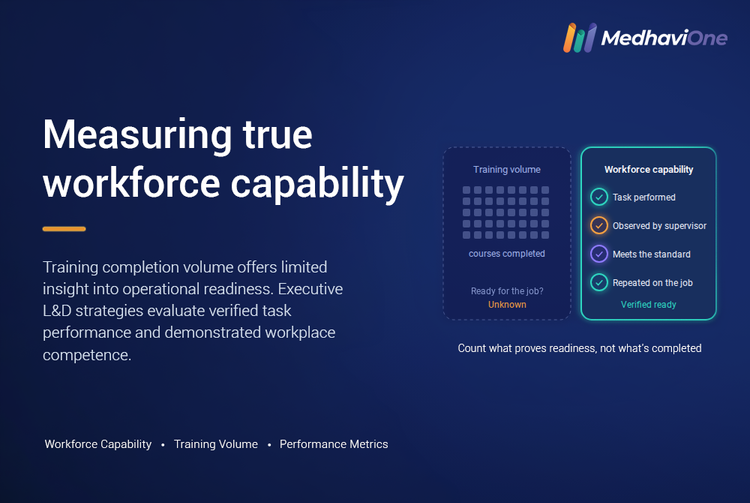
Learning dashboards have long answered the wrong question. Leaders track how many people attended training, how many courses were completed, and what the completion rate reached. These numbers move fast — but they rarely align with performance.
A worker finishes ten courses and still can't execute the task. A company delivers 100,000 training hours and still carries the same skills gap. A platform reports 95 percent completion, and managers see zero change in output.
Certificates pile up. Productivity doesn't move. This is the core problem behind most workforce transformation efforts today: organizations measure activity, not capability. As roles shift and technology reshapes work, leaders need a sharper question than "how much training happened?" They need to know: what can this workforce now actually do that it couldn't do before?
Volume as a Proxy for Capability
Training volume became the default metric because it's easy to see. Capability is harder to observe — it requires evidence of execution, not attendance.
Reporting volume feels safe for management. If a board asks about development spend, leadership points to hours delivered. Effort gets tracked; results get ignored. This is exactly the gap that modern workforce development solutions are built to close — shifting the conversation from "how much training was delivered" to "what capability now exists."
Skills Are Changing Faster Than Training Can Track
The World Economic Forum estimates that 39 percent of workers' core skills will change or become obsolete between 2025 and 2030, and that 59 in every 100 workers will need retraining by 2030 — while 11 will lack access to it.
That pace changes what learning has to deliver. The goal isn't a fuller course catalog; it's sustained workforce readiness as roles and tools evolve. If a company rolls out automation software for customer service, the metric that matters isn't module completion — it's whether resolution time, output, and quality actually shift. Training is the intervention. Capability is the outcome.
Knowledge Versus Execution
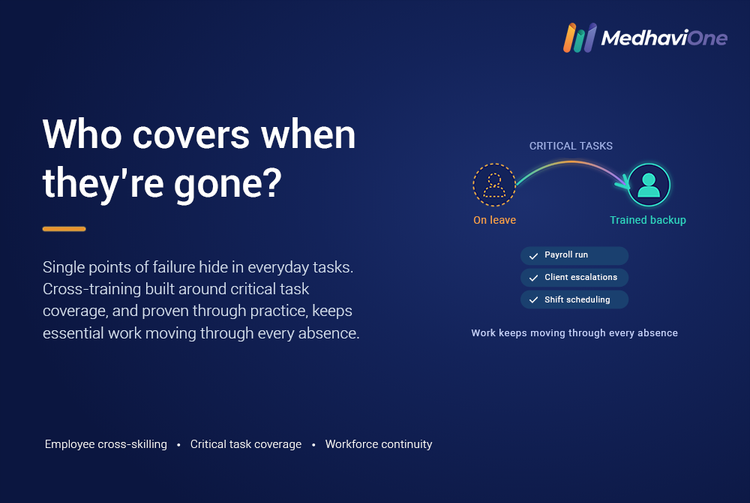
A capability gap isn't always a knowledge gap. Workers often know a rule and still fail to apply it — blocked by process, tools, management behavior, or lack of opportunity to practice. Post-module quizzes measure comprehension, not execution at the desk or on the floor.
The better questions come after the course ends:
Does the worker actually use the skill, and how often?
In what real scenarios, and with how much independence?
Do managers see a change in behavior or output?
Do operational results move?
These questions shift the focus from running programs to managing outcomes — the real test of any employee upskilling or employee reskilling initiative.
Transfer Matters More Than Completion Rates
A 100 percent completion rate on a managers' program only confirms people reached the end of the module — not that delegation improved, turnover fell, or team output rose. A warehouse safety course can produce a 100 percent pass rate on paper while workers keep bypassing protocols on the floor. A data analysis certificate proves someone passed a test, not that they solve real operational problems day to day.
The missing metric is transfer: does training turn into action, and does that action generate results?
Reskilling as a System, Not a One-Off Project
Too many organizations treat reskilling as a standalone intervention — identify a skill, build a course, enroll workers, issue certificates, close the project — while the underlying business problem stays unsolved.
A real strategy starts with the work itself:
Identify the roles the enterprise needs.
Map the capabilities those roles require.
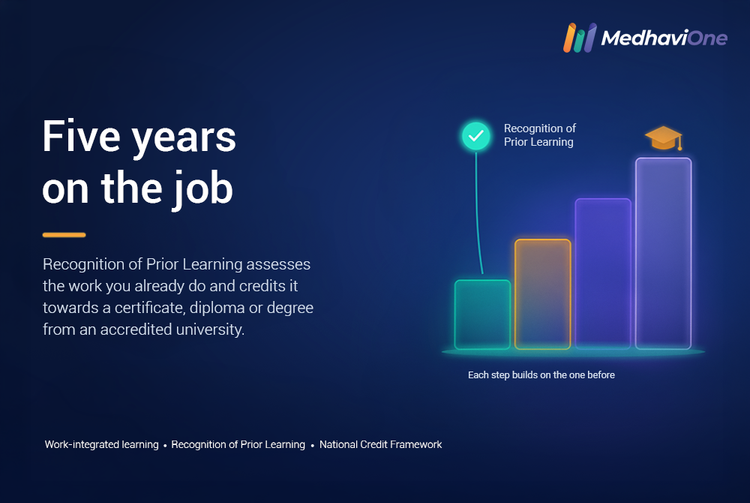
Assess capabilities workers already have.
Locate the gaps.
Build targeted instruction around those gaps.
Create structured opportunities to practice.
Verify whether capability actually changed.
Connect verified capability to deployment.
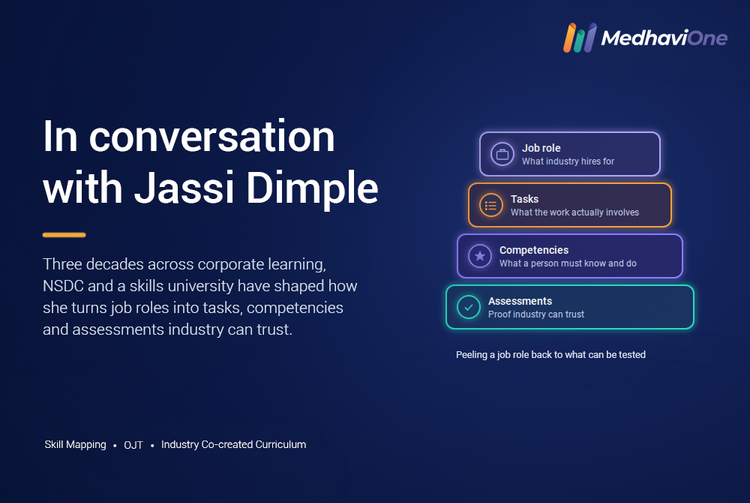
This creates a chain — Role → Capability → Gap → Instruction → Practice → Assessment → Deployment → Performance — rather than a checklist of attendance. It's the difference between tracking training and delivering genuine talent development solutions that move the business forward.
Metrics That Actually Belong at the Leadership Level
Operational metrics like hours delivered and completion rates still matter for running programs — they just don't belong at the top of the dashboard. Capability measurement needs five layers instead:
Acquisition — What can workers now demonstrate, not just recall?
Application — Are they using the capability in real tasks?
Manager observation — Do supervisors confirm a change in behavior or output?
Operational impact — Did output, quality, resolution time, or error rates move?
Deployment and mobility — Can workers now move into new roles, projects, or priority tasks?
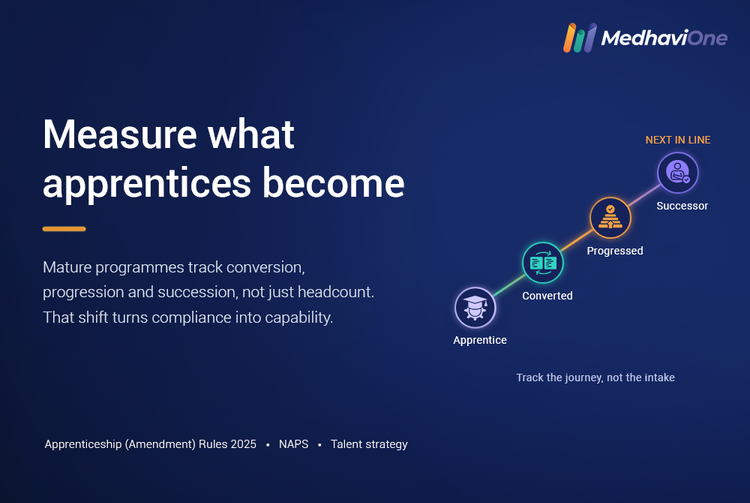
Training 10,000 people creates reach. Building verified capability in those same 10,000 creates capacity — and capacity is what separates a real talent pipeline from a training log.
The Learning Function Has to Evolve
Learning teams historically operated as a service desk: business units requested training, learning teams sourced it, workers attended, attendance got reported. That model can't keep pace with how fast roles are changing.
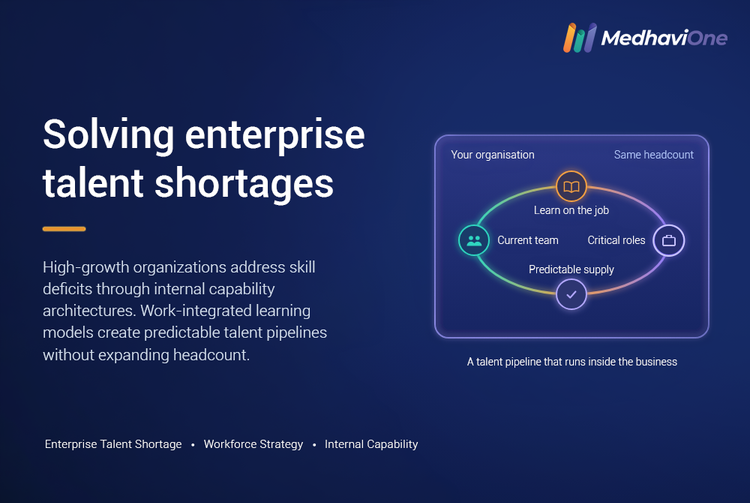
Modern learning functions — whether run internally or through an outside partner — need to operate more like a corporate learning academy, working backward from business strategy: which roles are expanding, which are transforming, which tasks are disappearing, and where capability needs to be built in-house rather than hired externally. This is increasingly why companies are turning to a dedicated corporate academy model — including corporate academy approaches built for the scale and skills demands of the Indian market — that ties learning design directly to workforce planning, not just course delivery.
The Capability Equation
The old formula rewarded volume: more workers trained, more hours logged, more certificates issued. The new formula rewards outcome: fewer people trained but more of them able to perform, redeploy, and deliver results without delay.
That's the real shift. It's not less training — it's training built to change what the organization can actually execute.
Questions Worth Asking Before the Next Training Review
What capability was actually built, and where is it being applied?
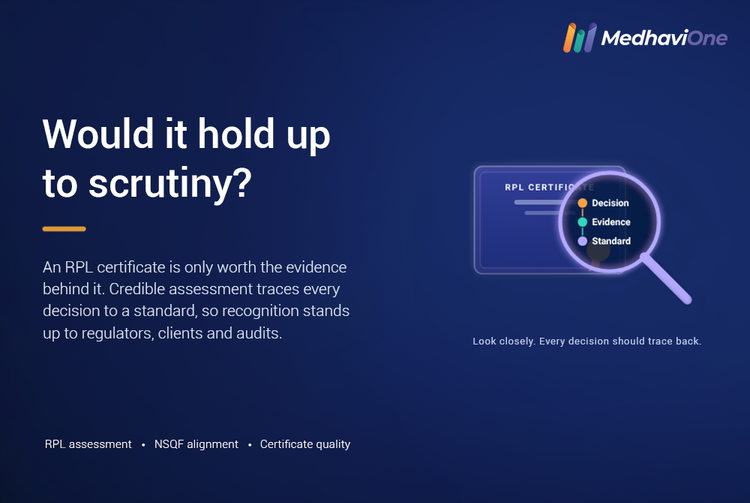
What evidence — beyond a certificate — proves performance improved?
What did managers observe change in behavior or output?
Which operational metrics moved as a result?
Which workers are now ready for deployment into priority roles?
What capability gaps still remain?
Organizations that track volume are documenting history. Organizations that measure capability are building the workforce they'll need next.