Table of contents8 sections
- More Than Just Hotels
- Career Options After Hotel Management: Four Major Pathways
- Hospitality Careers Beyond Hotels: A Career Comparison Table
- Hotel Management Career Scope: What Influences Career Growth?
- Alternative Careers in Hospitality: Opportunities Outside Traditional Hotels
- Skills That Travel Further Than You'd Expect
- Choosing the Right Path Forward
- The Bigger Picture
Mention a career in hospitality and most people think of the few images. A friendly face at a hotel front desk, a chef working in a busy kitchen or a server handling a packed dining room. These pictures are not wrong. They are incomplete.
The truth is, hospitality is one of the most connected industries today. It includes hotel chains, luxury resorts, event management companies, travel and tourism networks, aviation services, cruise lines and every kind of customer experience operation you can imagine. For a high school graduate thinking about what to do after Class 12 this wide range matters. A degree in hospitality is not a ticket to one kind of job. It’s a base that can lead to many different paths.
More Than Just Hotels
Hotels may be the most visible part of the hospitality world but they’re only one step in a much longer journey. The journey every traveler takes from the moment they start planning a trip to when they return home. Making this journey smooth requires different kinds of professionals working in different areas.
Leadership. This involves running the day-to-day work of a property. It includes managing teams organizing schedules and making sure guest service systems work well.
Entertainment. This covers everything from weddings and corporate meetings to concerts and big sports events.
Mobility. This includes planning travel itineraries, managing logistics at destinations and handling corporate travel accounts.
Food & Beverage Strategy. This area deals with restaurant chains, cloud kitchens, franchise networks, supply chains and food brand development.
The opportunities here are huge. According to the Ministry of Tourism India’s tourism and hospitality sector created around 84.63 million indirect jobs in 2023–24 alone. That number keeps going up as airports get more luxury resorts open and food delivery platforms become more advanced. All this growth creates a need for trained professionals.
So the real question for a Class 12 graduate is not "Do I want to work in a hotel?" That question is too narrow. The bigger question is: What kind of work environment excites you? What kind of problems do you like solving? Where do you see your career going?
The hospitality sector includes hotels, resorts, restaurants, event companies, cruise lines, airlines, travel agencies, and food service businesses. It also offers opportunities in corporate facilities management, luxury retail, and other service-focused sectors.
These diverse sectors create several career opportunities in hospitality for students who enjoy interacting with people, organising activities, solving problems, or managing business operations.
For example, someone interested in planning celebrations may consider event management, while a student who enjoys travelling might prefer tourism or aviation services. Those interested in business operations could pursue restaurant management, food entrepreneurship, or hospitality operations.
Career Options After Hotel Management: Four Major Pathways
Students often wonder whether a hospitality or hotel management qualification limits them to working in hotels. In reality, the skills gained through hospitality education can support different career choices.
Here are four major hospitality management career paths to consider.
1. Hotel, Resort, and Guest Experience Management
Hotels and resorts remain popular employment options for hospitality graduates. These workplaces require professionals who can manage guest services, coordinate departments, maintain service standards, and ensure a smooth customer experience.
Possible roles include:
=> Front Office Executive
Guest Relations Executive
Hotel Operations Executive
Housekeeping Supervisor
Food and Beverage Manager
Hotel Sales and Marketing Executive
Resort Operations Manager
With experience, professionals can progress into supervisory, departmental, and general management positions.
This pathway is suitable for people who enjoy customer interaction, team coordination, and managing day-to-day operations.
2. Food Service, Culinary Management, and Entrepreneurship
The food and beverage sector offers opportunities beyond working as a chef. Restaurants, cafés, catering companies, cloud kitchens, food franchises, and institutional food service providers need professionals who understand service operations and business management.
Potential roles include:
Restaurant Manager
Food and Beverage Executive
Catering Operations Coordinator
Cloud Kitchen Operations Executive
Food Service Supervisor
Restaurant Entrepreneur
Food Franchise Operations Executive
Students interested in entrepreneurship can also use their knowledge of customer service, budgeting, operations, and team management to establish a café, catering business, or food brand.
These roles can be suitable for individuals who enjoy food, business planning, and managing service operations.
3. Event Production and Venue Operations
Events require detailed planning, coordination, budgeting, vendor management, and customer service. Hospitality graduates can apply their organisational skills to weddings, corporate meetings, exhibitions, concerts, conferences, and other large gatherings.
Career options include:
- Event Coordinator
- Wedding Planner
- Conference and Banquet Executive
- Venue Operations Executive
- Corporate Event Planner
- Exhibition Operations Coordinator
- Event Operations Manager
This pathway suits people who enjoy planning activities, working with different teams, and managing changing requirements under time pressure.
Practical experience, communication skills, and attention to detail can be particularly useful in this field.
4. Travel, Tourism, and Aviation Services
Travel and tourism businesses focus on helping people plan journeys, arrange services, and enjoy smooth travel experiences. Airlines, travel agencies, tour operators, destination management companies, and cruise businesses offer potential opportunities for hospitality graduates.
Possible roles include:
- Travel Consultant
- Tour Operations Executive
- Tourism Coordinator
- Airline Customer Service Executive
- Airport Guest Services Executive
- Cruise Hospitality Staff
- Destination Management Executive
These roles may involve managing bookings, assisting passengers, coordinating travel arrangements, and delivering customer support.
Students interested in international travel, different cultures, and customer-facing work may find this career pathway appealing. Certain aviation and travel positions may also require additional training, certifications, or role-specific qualifications.
Hospitality Careers Beyond Hotels: A Career Comparison Table
Hospitality skills are useful in many workplaces. The following table compares different sectors, possible roles, and the skills that can help professionals succeed.
The exact responsibilities and eligibility requirements vary by employer and position. Some roles may require specialised training or relevant work experience in addition to a hospitality qualification.
Hotel Management Career Scope: What Influences Career Growth?
The hotel management career scope extends across different industries, but career progression depends on more than completing a degree.
Several factors can influence the opportunities available to graduates.
Entry-level roles can provide a starting point for gaining experience. As professionals develop their expertise, they may progress into supervisory, management, training, or entrepreneurial positions.
Career growth and salary potential vary according to the role, employer, location, experience, and additional qualifications.
Alternative Careers in Hospitality: Opportunities Outside Traditional Hotels
Hospitality education can also support a move into industries that do not operate primarily as hotels, restaurants, or travel businesses.
These alternative careers in hospitality can be especially relevant to students who enjoy customer experience, business operations, or service management but want to work in a different environment.
1. Luxury Retail and Customer Experience
Luxury retail businesses focus on personalised service, customer relationships, and high-quality experiences. Professionals with hospitality experience may find opportunities in client relations, customer experience, and retail operations.
Understanding customer expectations, communicating professionally, and resolving service issues can be valuable in this sector.
2. Corporate Facilities and Workplace Services
Large organisations need teams to coordinate workplace services, vendor relationships, employee facilities, and daily operational requirements.
Hospitality graduates with strong organisational and coordination skills may consider entry-level positions in facilities coordination, workplace services, or corporate administration.
3. Healthcare Support Services
Hospitals and healthcare organisations require effective non-clinical operations to support patients, visitors, and staff. Customer service and operational coordination skills can be relevant to patient experience, front-desk administration, and hospitality-related support services.
However, clinical and regulated healthcare roles require the specific qualifications prescribed for those professions.
4. Customer Experience and Service Operations
Many businesses depend on positive customer interactions to retain clients and build trust. Hospitality professionals may apply their service knowledge to customer experience, client relations, service coordination, and customer support roles.
Depending on the position, employers may also expect digital skills, product knowledge, and experience with customer relationship management tools.
These options show that hospitality training can be relevant beyond traditional accommodation and food service businesses.
Skills That Travel Further Than You'd Expect
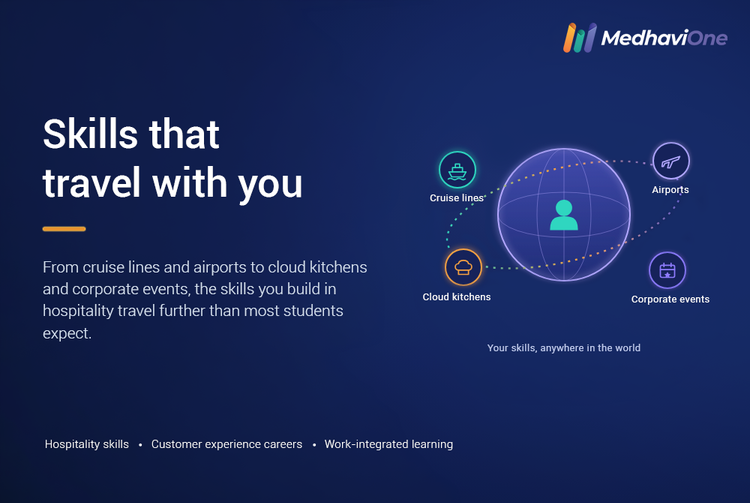
One of the parts of a hospitality education is how useful its core skills are in other industries. The ability to manage guest relationships and plan events. Run food service operations can be used in fields outside hospitality too.
Healthcare needs people who can manage care. Luxury retail values those who understand service excellence. Corporate facilities management benefits from staff trained in operations. Even premium financial services seek people with customer experience backgrounds.
Some of the important skills include:
Intercultural Communication. Working well with people from different cultures and backgrounds.
Operational Problem-Solving. Staying calm and efficient when something goes wrong in real time.
Digital Literacy. Using reservation systems, CRM tools and the growing number of digital platforms that support modern service work.
Choosing the Right Path Forward
The choice of education after Class 12 can make a difference in how fast your career moves forward. Look for programs that mix classroom learning with real-world experience. Not lectures, but time working in actual businesses.
An earn-while-you-learn degree is also worth considering. These programs let you gain work experience and earn your degree at the time. That way you graduate ready for the workplace. When combined with career-focused degrees and skill-building tracks this kind of learning ensures you graduate with both knowledge and real experience that employers value.
The Bigger Picture
It’s important not to see a hospitality degree as preparing you for one job. It’s better to think of it as a foundation. One that opens doors across hotels, events, food service, travel and beyond. The industry values people who can adapt.. It gives you space to find your place. Or even redefine it.
If you are drawn to people to solve problems and to moving environments, hospitality offers something rare: a career that can grow and change with you. Across industries and around the world.